ReelAbilities
Accessible Festival Platform
ReelAbilities is North America's largest disability-focused film festival — a flagship NYC festival, affiliate festivals across 15 cities, a streaming platform, a film-licensing marketplace, and an education program. We've worked with them since 2022; the platform rebuild was signed in 2024, launched in 2025, and we still run it today.
Where they started
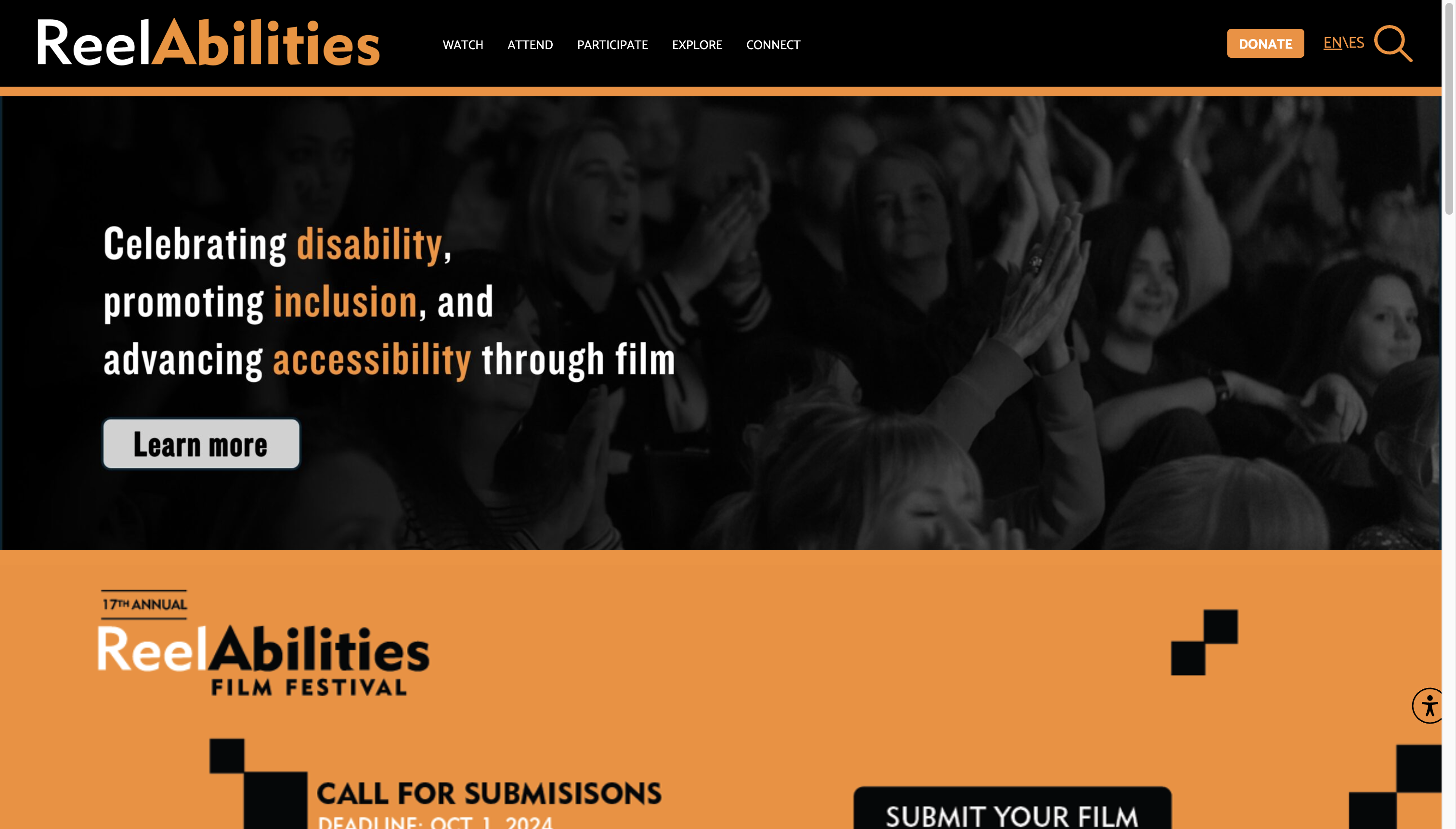
By 2023, ReelAbilities ran on WordPress Multisite with Elementor — four separate web properties, each drifting apart:
- Films couldn't be added. Film records — Vimeo link, PDF, password — were hardcoded inside Elementor page source. The film list was capped at ~17 titles because adding one meant editing code.
- Page structure fought the editors. Designing a parent page in HTML blocks locked its content and broke child-page nesting.
- Manual everything. Guest itineraries for ~80 festival guests took days of spreadsheet work. The production schedule was a ~5,000-line Excel that, in the last two years on the old system, was never finished before the festival started.
In 2023 we built them a marketplace on WordPress for licensing films between host cities and rights-holders. It worked — but the customizations the payout flow really needed weren't possible inside third-party WordPress payment-gateway plugins, and the budget at the time didn't allow replacing them. We're including this because it's the honest setup for what came next: in 2024 they trusted us again — this time to rebuild the whole platform properly.
What we built
A single Next.js + Directus platform, delivered against a five-month plan, consolidating all four properties:
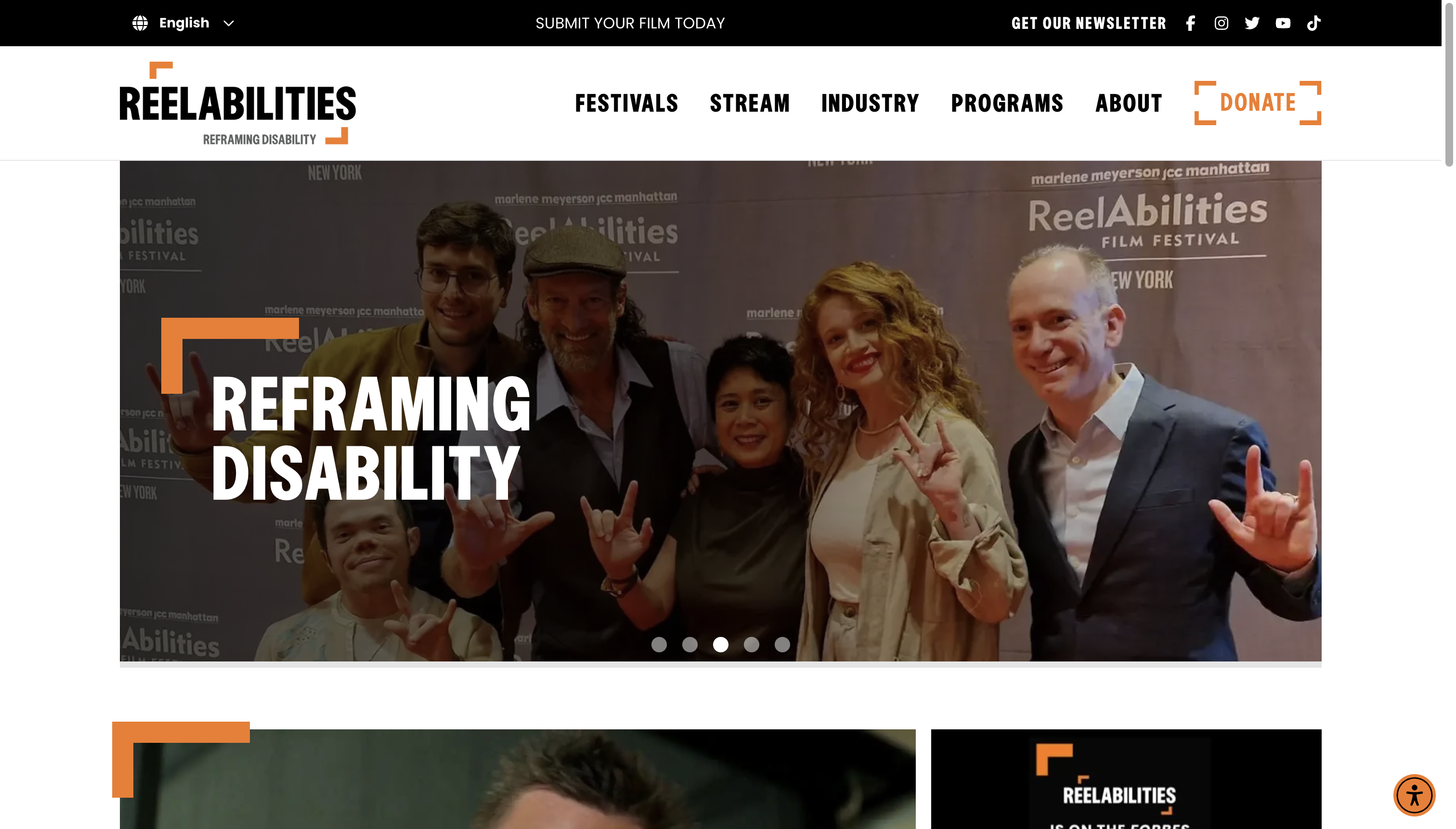
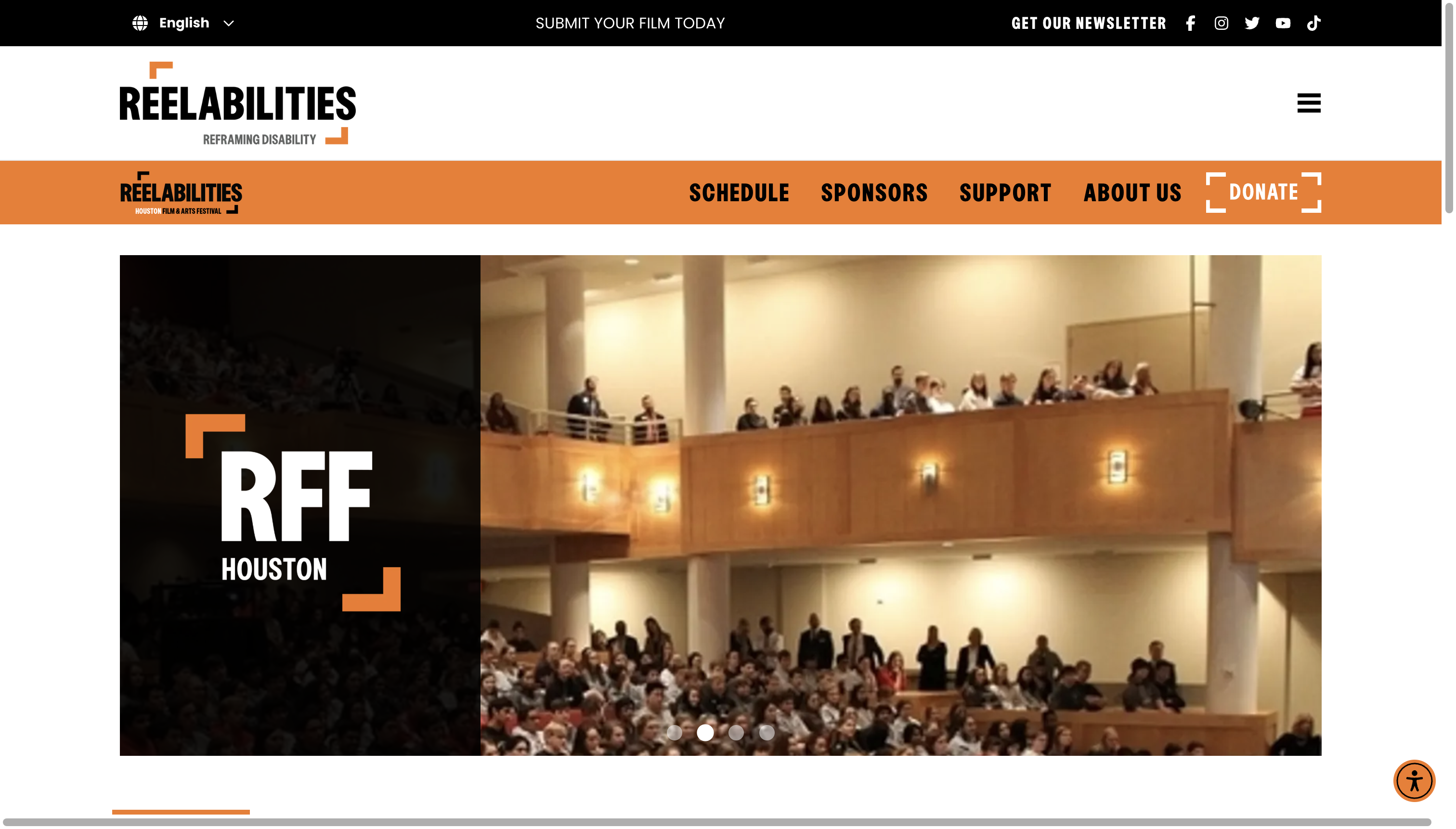
- 15 city festival sites as sub-paths (
/houston/events,/toronto/films/…) off one codebase — no subdomains, by client requirement. Adding a new city takes about 30 minutes. Zero cross-city data leaks in 12+ months of production, enforced by role-based permission filters in the CMS. - A block-based CMS the team actually uses: 26 content blocks; a new page takes 15–20 minutes with zero developer help. The content team has built 30+ pages on their own after a single 2-hour training session. Same-day page launches replaced a 1–2 week dev cycle.
- Registration and access automation: registering for a film fires confirmation and access emails automatically; every registration is visible in the backend.
- One-click guest itineraries replacing days of spreadsheet work per festival.
- Auto-generated production schedule with festival-specific rules baked in — 2h venue setup before first screening; 20-minute conversation + 20-minute changeover after each film — replacing the 5,000-line Excel.
- The marketplace, rebuilt inside the platform: seller magic-link approval → buyer download confirmation → admin payout notification, with orders auto-approving after 10 days if a seller doesn't act. The manual invoice-chasing is gone.
- Streaming, accessibility-first: every film carries two full video files — open captions, and open captions + audio description — instead of relying on a player's audio-track switcher that a blind user may never find. Open captions are always on, for every film.
Where AI runs inside the product — shipped features, not marketing:
- The image pipeline generates alt-text with OpenAI and compresses via TinyPNG — measured 38 hours saved per festival cycle (95% reduction) on a platform where alt-text is not optional.
- ReelRedirects: AI-suggested redirects for legacy URLs, auto-applied once click-confidence is high.
- Legacy disability-topic tags migrated with scripted AI classification.
Accessibility is the result that matters
This platform exists for disabled audiences — so accessibility is the metric we lead with, and it's current, not historical:
- Lighthouse accessibility: 97 — measured August 2026, on the live production homepage, a year-plus after launch. Not a launch-day number that decayed; run it yourself.
- Built to a WCAG 2.1 AA target by written mandate — the project rules open with "accessibility is ALWAYS the top priority." Semantic HTML foundation, skip links, keyboard navigation. (We don't claim third-party certification — no honest agency should without an audit.)
- Post-launch bar: an accessibility overlay failing on iPhone is treated as a breach of the product's reason for existing, not a UI bug — device screenshots required before merge.
Other measured results
Our own measurements, dated. Speed comparison measured at launch (2025) on the same pages.
| Metric | WordPress (before) | Platform (at launch, 2025) |
|---|---|---|
| Page load | 4.2s | 0.8s |
| Time to interactive | 6s | 1.5s |
| Avg image weight | 2.5MB | 400KB |
| New film added | not possible without a developer | editable record |
| New page | 1–2 week dev cycle | 15–20 min, content team |
| CMS licensing | — | $0/yr (self-hosted Directus) vs $4,800–6,000/yr commercial headless |
During the 2026 festival season the platform's organic search traffic ramped from ~30 to a peak of 152 clicks/day (~5×) with rising average position — while the team ran the festival on it. (Google Search Console, our data.)
Honest notes on the stack
What we published elsewhere, repeated here: Directus needed 20–30% more development time than initial estimates for workarounds — silent image-upload failures, admin UI lag with concurrent editors, no config sync between environments. We'd still choose it for this use case; we'd budget for it differently.
Where it stands
Launched 2025; we still run it. Year two of ongoing support, near-daily contact, new cities pending signed agreements. The platform's next festival is already loaded.
“Shyam is a dear and trusted colleague, a web development and programming genius, whom I wholeheartedly recommend.”